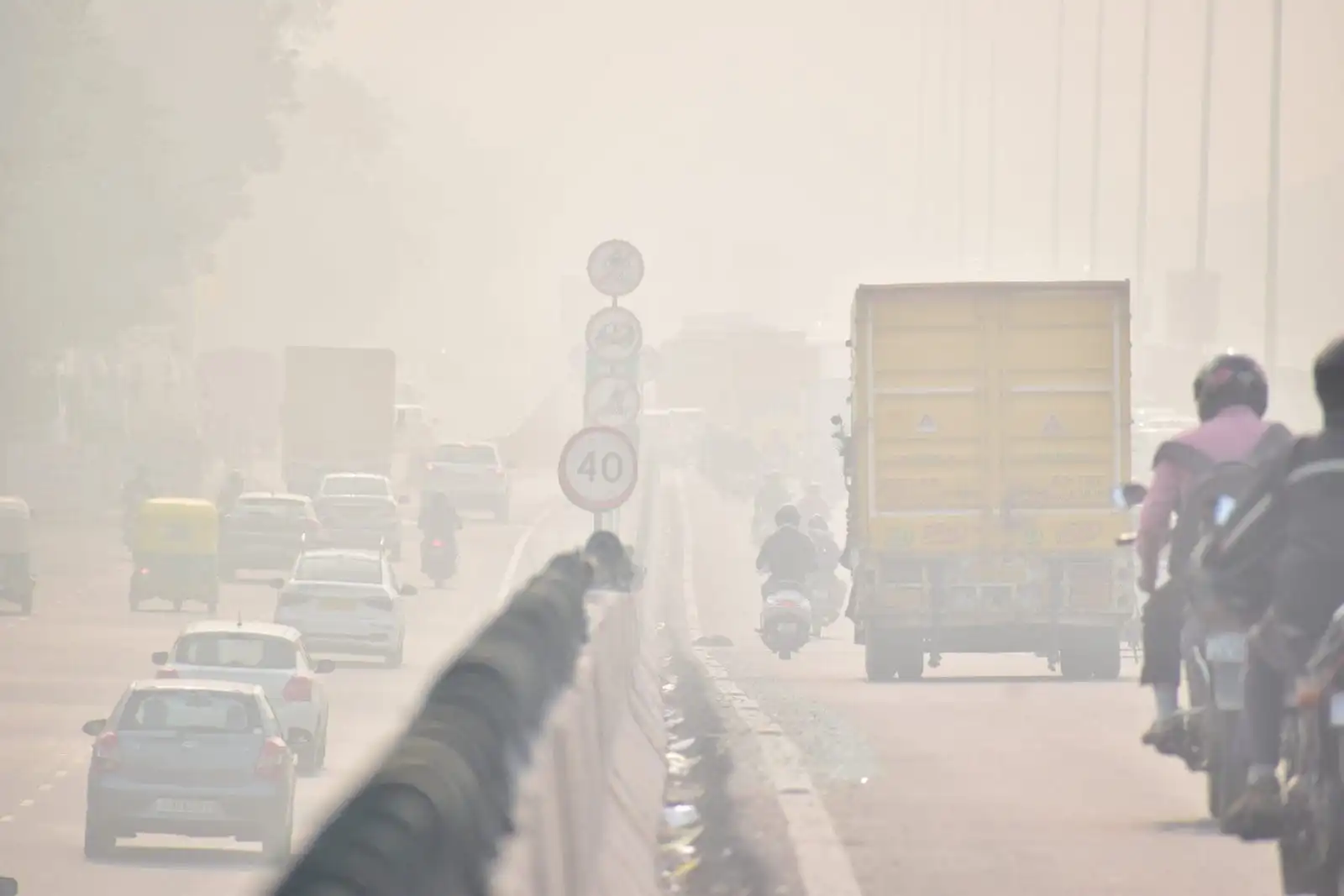
Air quality in India, particularly in Delhi, has become a national concern on a daily basis. The days following Diwali pushed pollution levels to extremes across major cities, but the situation in the capital turned especially alarming even difficult to breathe. What many still fail to recognise is that the damage isn’t limited to children or elderly citizens. Even the healthiest people, athletes, runners and regular fitness lovers are feeling the impact of toxic air every time they step outside to train.
India’s growing population and its heavy dependence on vehicles, industries and resource-hungry production systems have long contributed to dangerous pollution levels.
But in Delhi, the air has crossed a threshold where the effects are almost instant. People landing in the city often describe the same experience: throat irritation the moment they step out, discomfort in breathing and a burning sensation in the eyes. From above, Delhi looks wrapped in a dull, grey layer of smoke and chemical haze that refuses to lift.
Inside most homes in the city, the AQI hovers between 150 and 200, already unhealthy for the human body. Outdoors, the number commonly shoots up to 400, 500, and in several pockets, pollution monitors can go as high as 999, which is essentially off the charts and is considered hazardous to breathe.
To understand how severe this is, an AQI between 0 and 50 is classified as “good.” Some developed nations operate at levels as low as 17 or 22. In comparison, India finds itself struggling far behind, breathing in air that doctors equate to smoking nearly 11 cigarettes a day. This comparison holds not just for vulnerable groups, but for every single person living and moving through these conditions, including professional athletes.
There is a widespread belief that physical fitness offers some kind of immunity against pollution. In reality, the opposite is true. Athletes breathe far more deeply during practice and competition, which means a much larger volume of polluted air enters their lungs in a shorter time.
Dr Vijay Kumar Agrawal, Director of ICU and Pulmonology at Yatharth Super Speciality Hospital in Faridabad, explains that even healthy lungs cannot cope when the AQI crosses 400. The air at such levels carries dangerous pollutants like PM2.5, nitrogen oxides, ozone and carbon monoxide. These particles irritate the airways, settle deep inside the lungs and make breathing more difficult even for individuals in peak physical form.
During exercise, the breathing rate increases significantly. The deeper the breath, the deeper these pollutants travel. Over time, they cause inflammation, narrowing of the air passages and a constant feeling of tightness in the chest.
Many athletes experience shortness of breath more quickly than usual, while some find themselves coughing or wheezing after even a brief outdoor workout. This internal stress is silent but serious, especially for professionals whose careers depend heavily on lung capacity and stamina.
The damage isn’t just immediate; it is cumulative. Fine particles that enter the bloodstream can gradually reduce lung efficiency, irritate bronchial tubes and increase the likelihood of developing asthma-like symptoms. Athletes often adjust their breathing patterns during high-intensity activity to maximise oxygen intake. But in a polluted environment, this very adjustment causes more toxins to enter their system. Outdoor training areas, especially those near busy roads or open fields where dust and emissions settle heavily in the air, only make the situation worse.
Health experts around the world advise against outdoor workouts when air quality is classified as “very poor” or “severe.” They recommend shifting to indoor training and using air purifiers where possible. Guidelines suggest that once the AQI crosses 200, it becomes necessary to consider postponing or relocating sports events indoors.
When the AQI climbs above 300, outdoor physical activity is ideally meant to be cancelled altogether. Yet, several events continue to take place in open stadiums in Delhi even as AQI readings stand at around 400. It raises a troubling question: why are we risking the health of national and international athletes when alternative venues are available and far safer?
For everyday fitness enthusiasts, the situation is no different from others. A morning jog that once felt like the healthiest choice of the day may now be quietly harming the lungs. Even a dedicated workout routine cannot override the physiological effects of polluted air.
The body simply cannot protect itself from toxins at this scale. Instead of building stamina, the lungs may actually lose capacity over time. Instead of strengthening the heart, constant exposure may place additional strain on it.
The growing air crisis in India is not merely an environmental concern anymore; it has become a direct threat to public health, especially for those who spend long hours training outdoors. Until pollution levels improve, protecting one’s lung health has to take priority over outdoor workouts. Indoor training, filtered air and timed sessions around pollution peaks are no longer optional habits; they are essential.
As athletes and fitness enthusiasts continue to push themselves physically, awareness becomes the first and most important line of defence. Performance can always be rebuilt. Lost lung capacity cannot.